Ultrasound
Public Gallery - London, UK
Alessandra Acierno, Ma Lingli, Roland Knowlden Jr., Minami Kobayashi, India Sachi, Yi To, Idris Young
June 18 — July 25, 2026




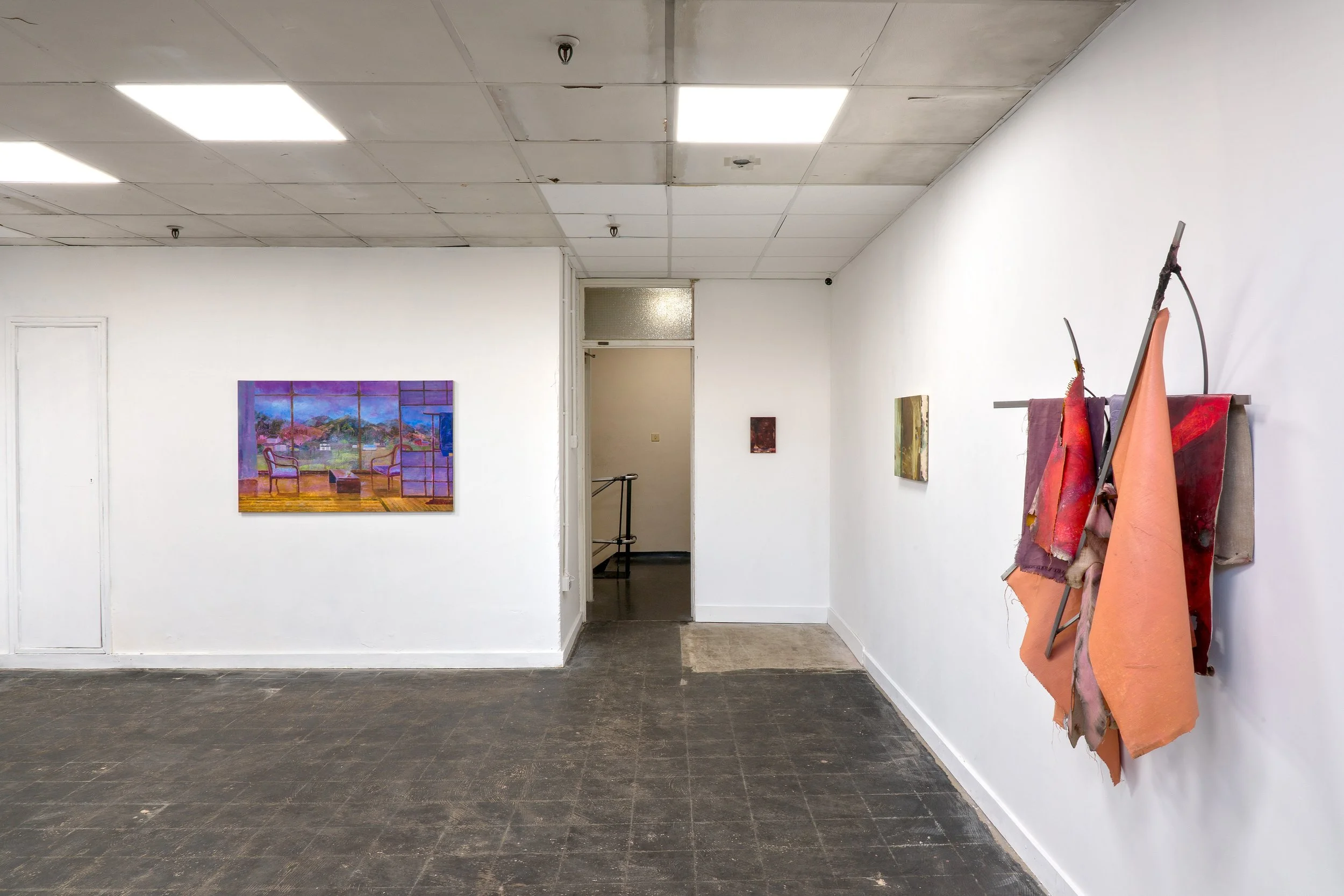
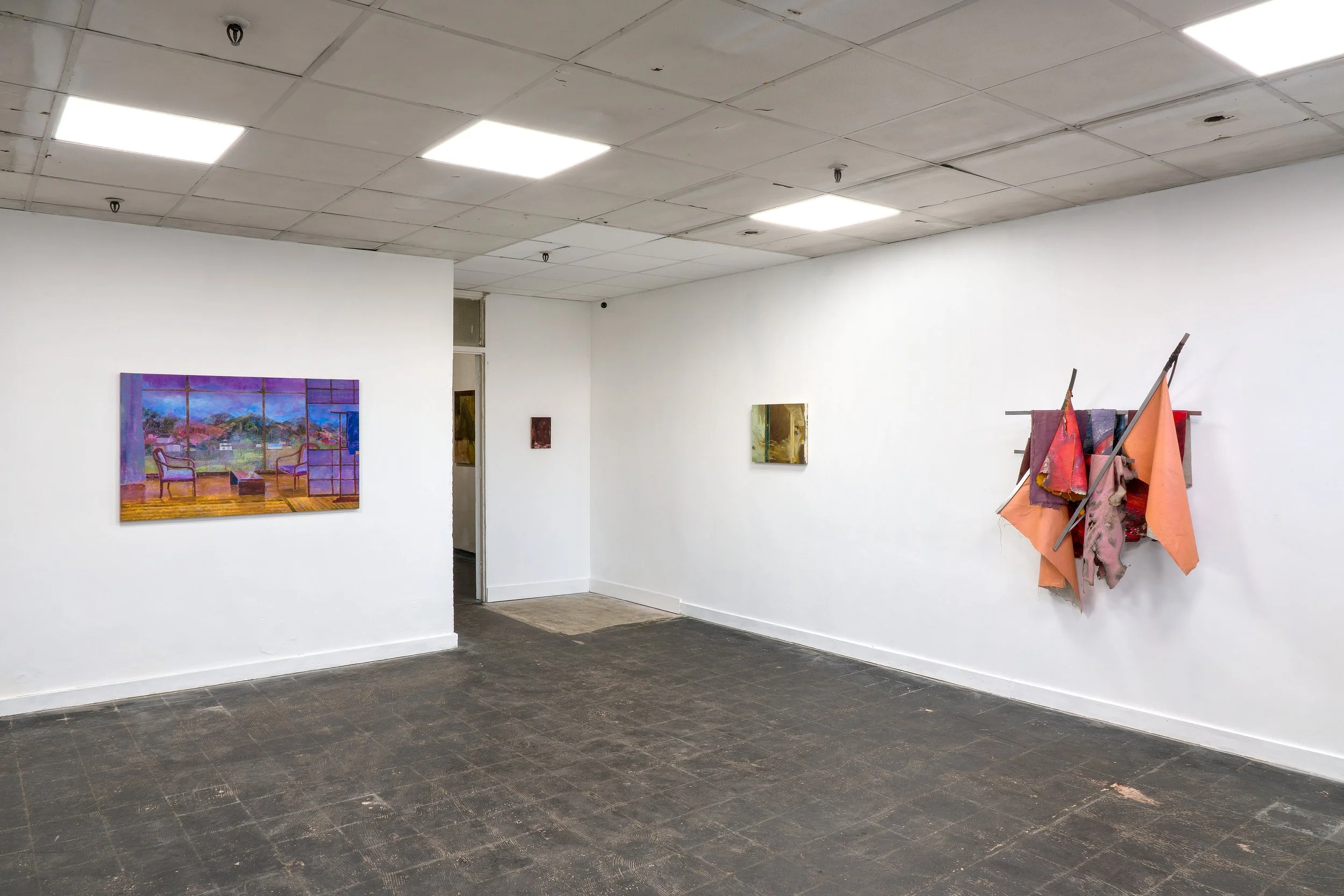
Public Gallery is pleased to present Ultrasound, a group exhibition of painting, sculpture and mixed media works that broadly consider visibility, legibility, and acts of concealment. Exploring images that resist easy interpretation, the exhibition creates space for visual interference, suspended narratives, and continuous states of becoming.
Idris Young’s practice resists closure through a sustained engagement with “not-yetness”, addressing identity and disability without stabilising either as fixed categories. In Portrait of a Man in Five Fathoms (2025), layers of encaustic obscure the subject’s face and sustain this ambiguity, while the title gestures to the Old English maritime measurement of oceanic depth, reinforcing notions of distance and obscured visibility. Yi To’s work similarly considers pre-narrative states of formation, where the body is not yet organised into fixed coordinates of identity or location, but rather in a moment of becoming. Her works approach the subliminal and metaphysical, relying on abstraction as a fleeting attempt to convey the materialisation of form, the basis of life, or the fossilisation of something once-living.
Alessandra Acierno extends these concerns towards the figurative, constructing cryptic tableaux in which repressed subjects appear suspended in withheld and ambiguous narratives, as in The Conversation (2026). Her paintings stage the gaze as an ethical pressure, producing scenes that oscillate between legibility and refusal, inducing a sensation of the unheimlich, or uncanny. India Sachi incorporates self portraits alongside found photographic material, layered and disrupted through her referential painting process. Soldier's wife (2026), recalling the Neoclassical genre of odalisque painting, depicts a lounging subject partially absorbed by the folds of bedsheets and collaged floral patterning, blanketing the figure in an act of disruption and concealment. By contrast, Minami Kobayashi’s paintings construct visibility through carefully built narrative scenes that draw on histories of fauvism, Japanese gardens, and Buddhist monk traditions. Late spring in the neighborhood (2026) extends ideas of camouflage and interference, where a sleeping figure recedes into a bed of moss in the serene landscape.
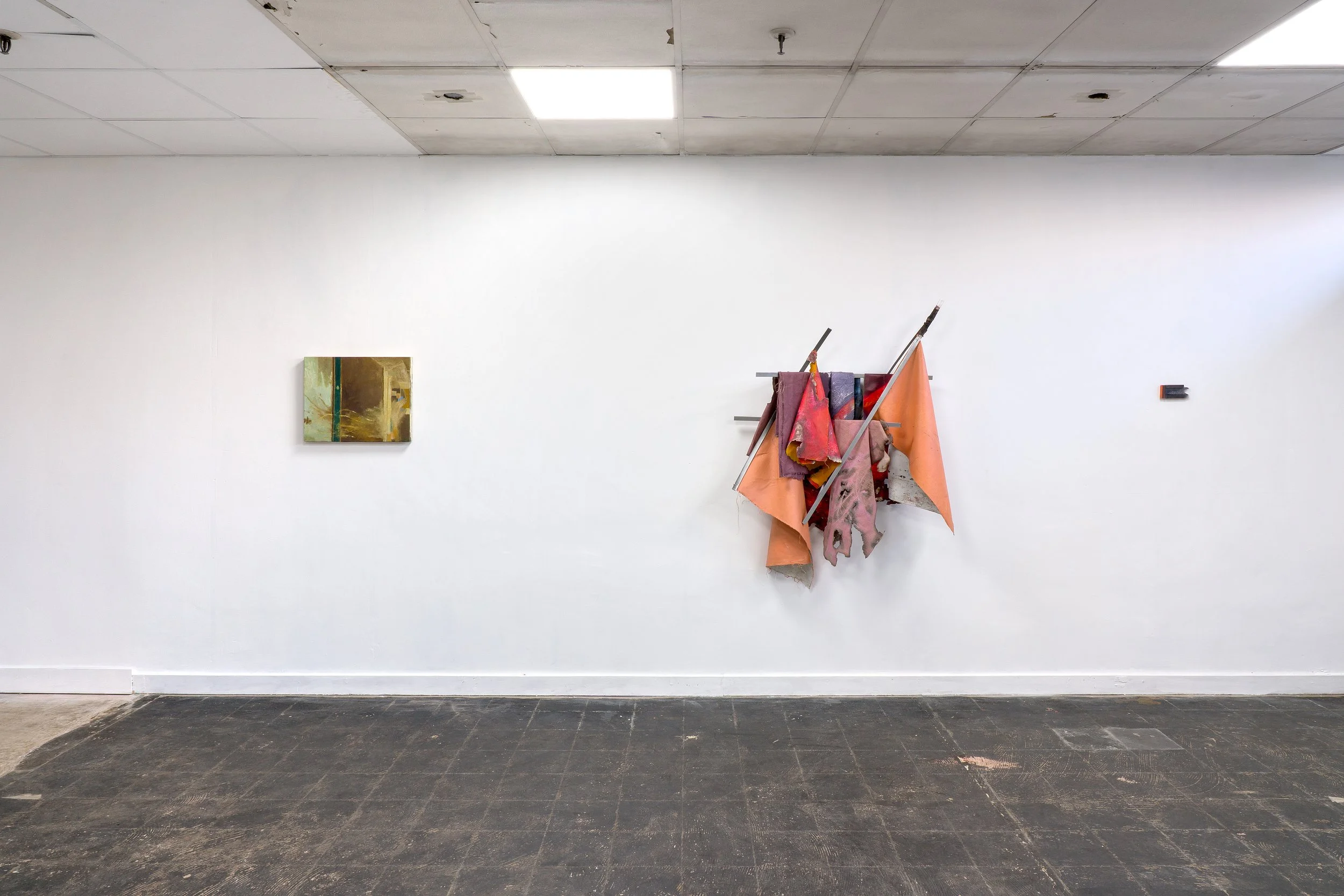
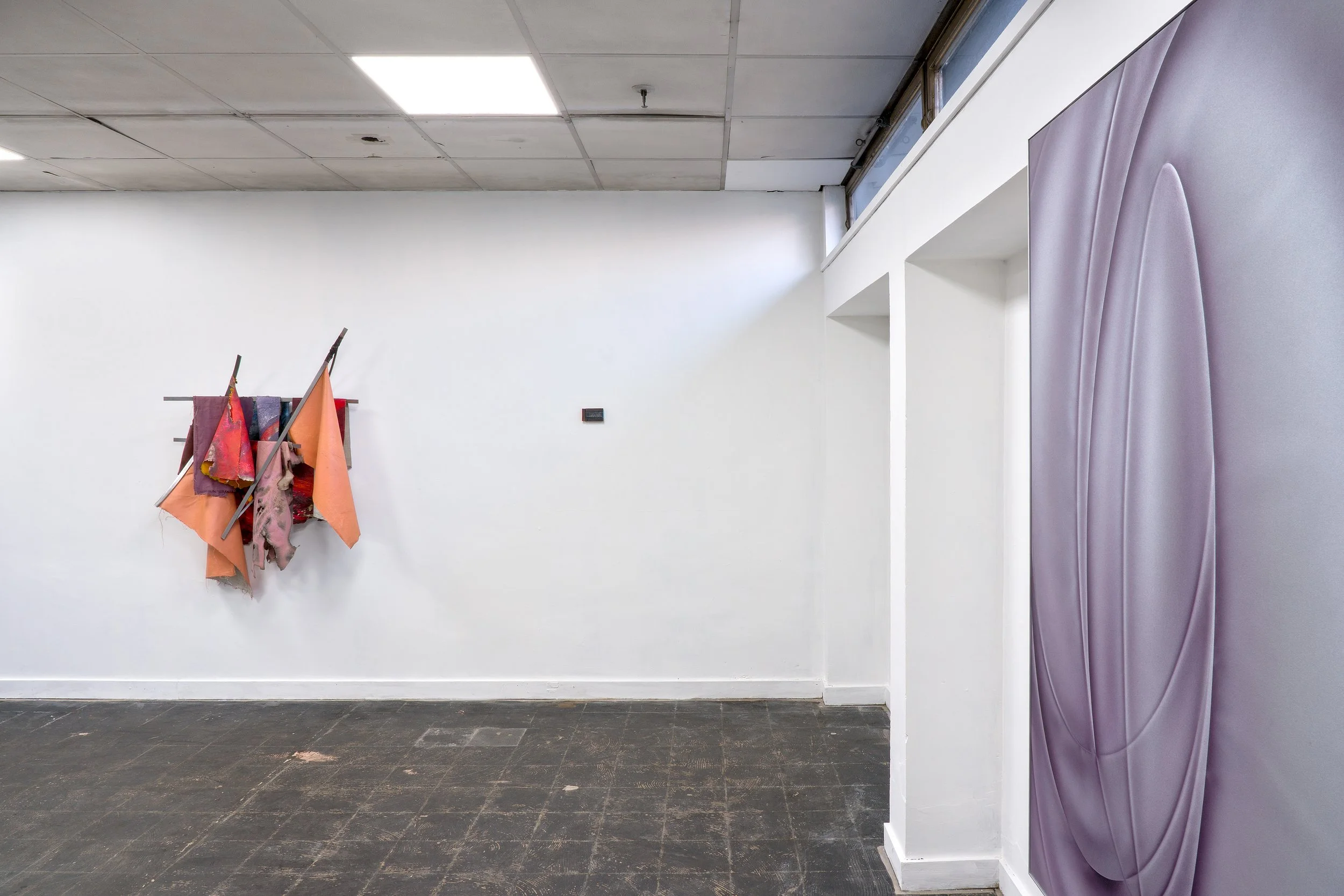
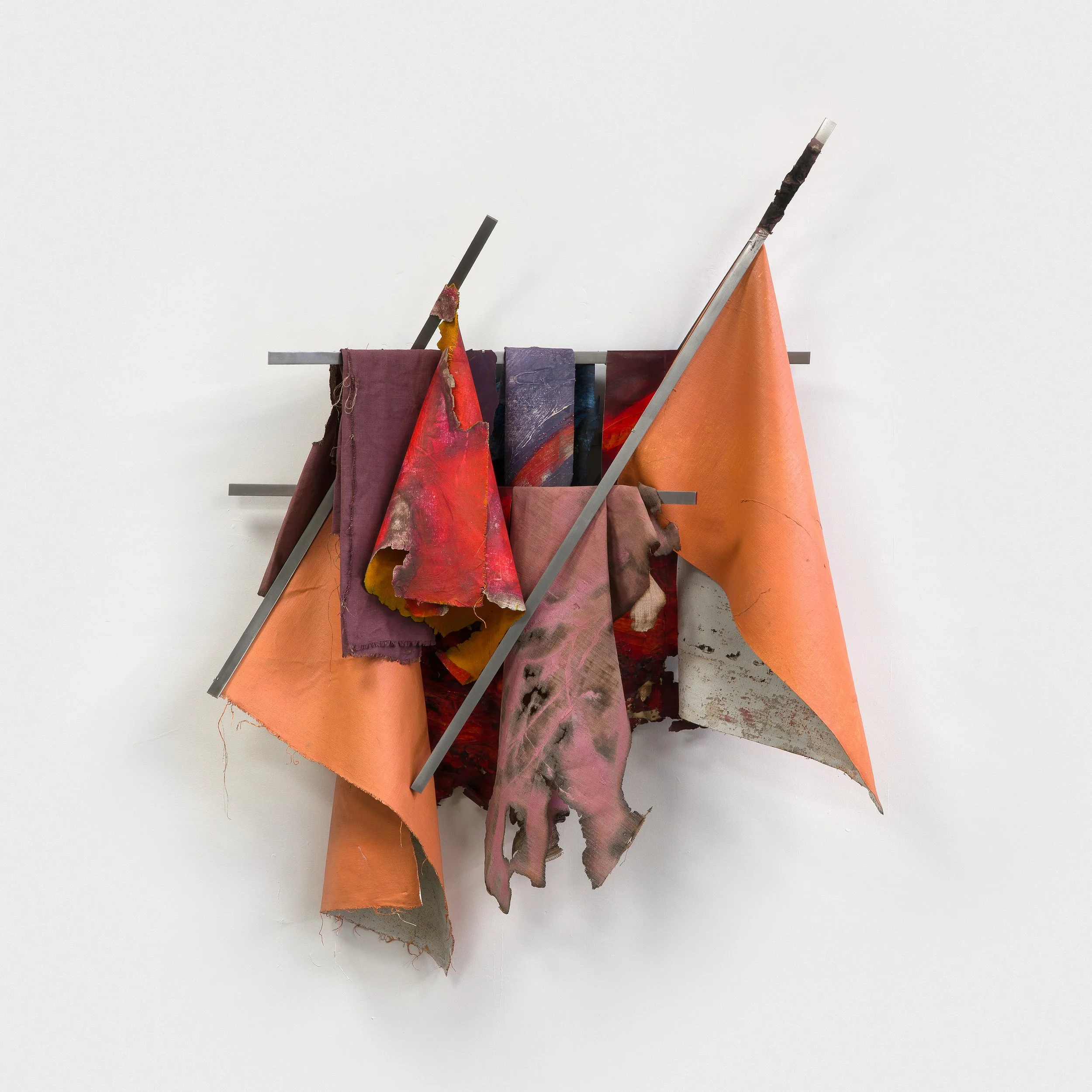
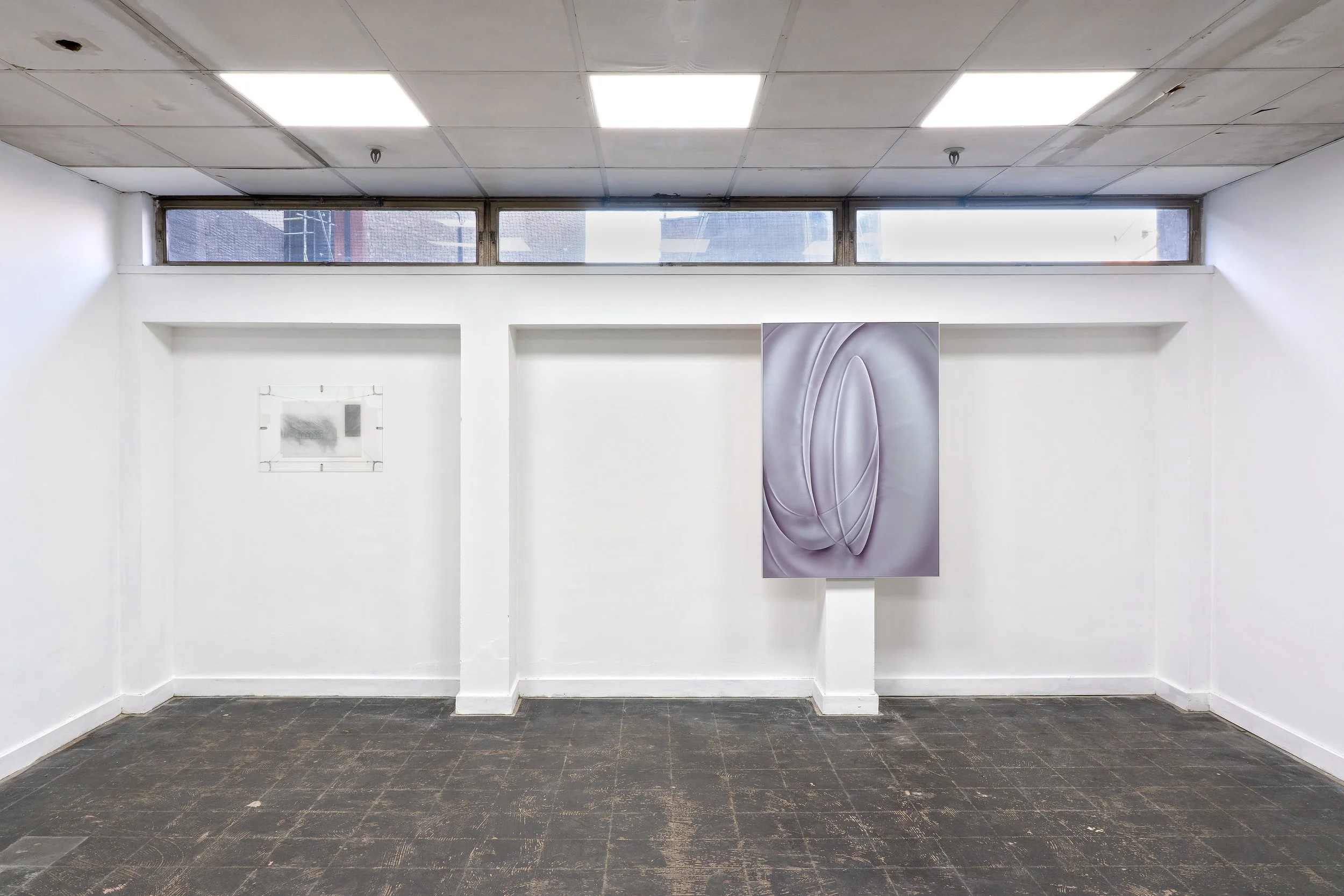
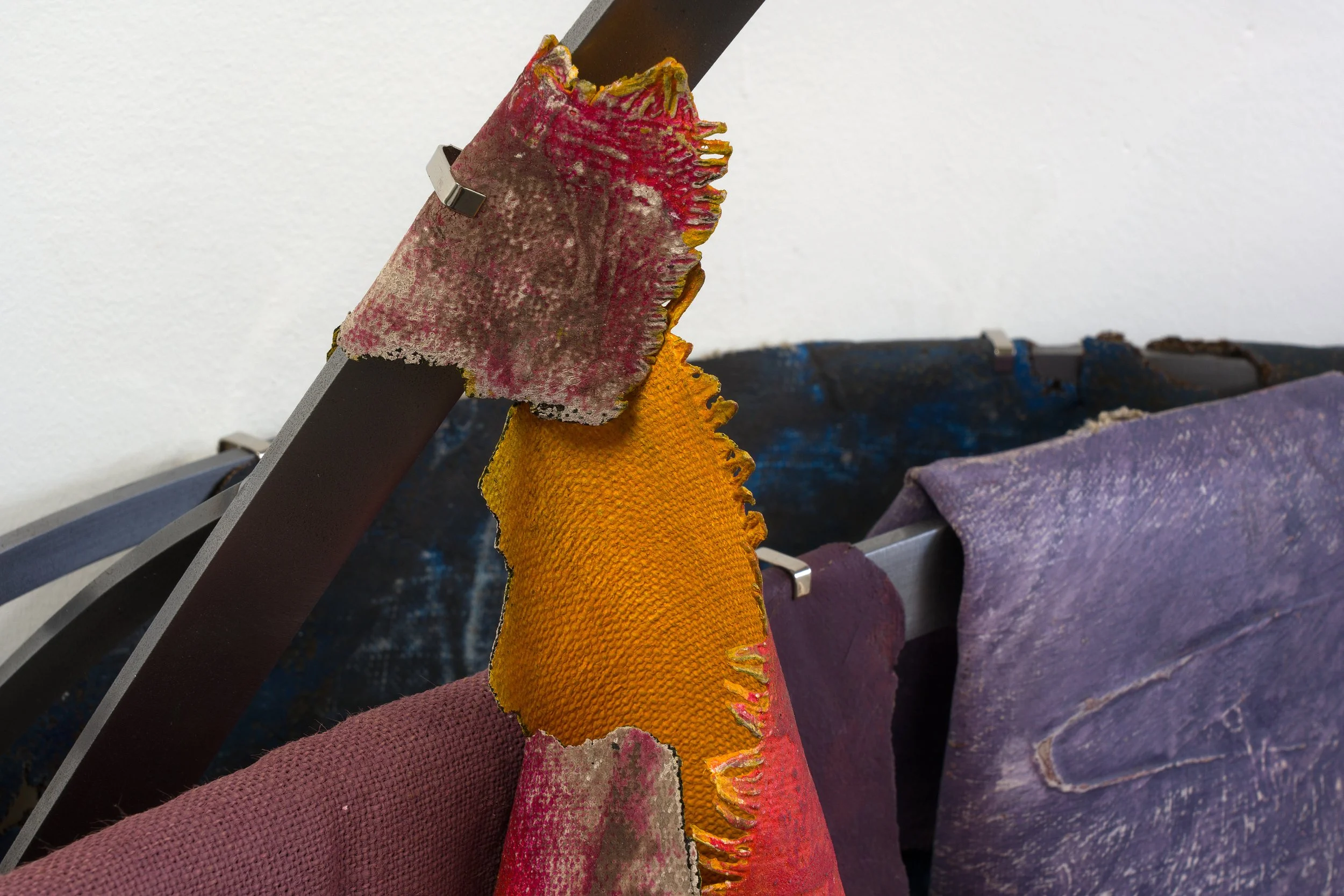
Ma Lingli and Roland Knowlden Jr. consider legibility and concealment through distinct approaches to surface and spatial construction. Lingli’s works operate through the material intelligence of silk, where folding, airbrushing, and layered translucency generate shifting relations between light, shadow, and illusion. In 34 (2026), light and shadow are structurally embedded rather than descriptive, the viewer’s proximity and angle altering the reading of the work. Knowlden Jr.’s practice similarly reconfigures space through collage and critical cartography, where erasure and displacement produce speculative geographies that resist fixed origin or boundary. I crushed a flower, so in retaliation, you place my tongue on a red hot silver spoon (vice versa) (2026), composed of a steel armature and draped fragments of torched acrylic on linen, suggests environments shaped by continuous transformation, functioning as a layered and contingent sculptural assemblage.
Exploring how images are formed under conditions of uncertainty, the exhibition returns repeatedly to strategies of image-making that rely on interference, concealment, and legibility, and question material and spatial systems of perception. In entirety, Ultrasound considers visibility as partial and contingent, bringing together practices that consider image and narrative as perpetually in formation.